

Research project: The local reality of depression
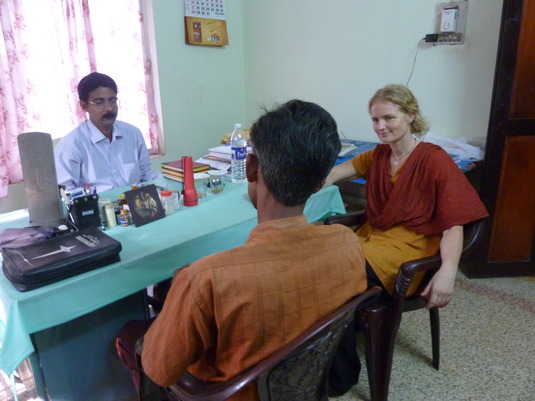
An alarming high number of people are suffering of depression worldwide. According to WHO, depression will be the second most important health problem by the year 2020. Furthermore, in the South Indian state of Kerala more and more people are diagnosed with depression. Mental health experts link the high number of depression causally to Kerala’s fast socio-economic transformations which includes the decline of the joint family system, the discrepancy between high standards of education and low employment, the labor migration to gulf countries resulting in “gulf depression” of the gulf migrants as well as of women left behind in Kerala, the gap between high ambitions and expectations and the often harsh socio-economic reality, the heavy consumption of alcohol as well as the pressure exerted on children by the school system. Depression has to a great extent replaced possession and sorcery as an idiom of distress or is linked to local categorizations of mental distress in multiple ways. Like in other parts of the world, the biomedicalization and pharmaceuticalization of distress and despair has led the importance of psychiatrists in the field of “common mental disorders” to grow and has facilitated a rising market for antidepressants.
The formal and informal mental health care of Kerala is a complex web of interrelated concepts, theories and practices. Apart from biomedical general practitioners and psychiatrists, Ayurvedic doctors, astrologists, mantravādi, Muslim thangal, Christian priests or other ritual specialists are frequented, depending on religious, economic and educational background and pragmatic considerations. Patients and families navigate between different meanings and therapeutic practices. The theory of depression may therefore be complex and fluent. The different framings and cultural repertoires for making sense of persistent low mood provide persons diagnosed with depression with different options to experience and express their suffering which they use in a creative way to fit into the respective therapeutic institution.
In my current research project, I focus on how ‘depression’ is negotiated and glocalized in the context of biomedical practice in Kerala and what are the social and health political consequences. How is the biomedical practice of diagnosing and treating depression adapted to the local reality of Kerala? What is the aim of the treatment? Which symptoms are most prevalent, which others are not? How do moral norms influence the diagnosis? How is the concept ‘depression’ transformed and hybridized with local folk, religious, Ayurvedic and popular-psychological conceptions? How is depression communicated to patients and caretakers? How are antidepressants marketed and prescribed?
My second focus is on subjectivities of depression as cutting points of socio-political structures, power relations of expertises, economic interests, and perspectives on suffering and emotives of suffering. I explore the embodiment and the lived experience of being depressed in Kerala. I ask for the local and cultural narratives and the moral discourses within which patients and caretakers make sense of being depressed. Different, sometimes contested narratives embodied in these subjectivities are highlighted according to different therapeutic contexts.
Using the case of depression, the research aims to understand processes of glocalizing biomedically defined diseases in local realities and of how subjectivities are changed through these processes.
The project is funded by the Germna Research Foundation (DFG LA 3225(1-1) since 2012.
Project leader: Dr. Claudia Lang
The project is associated to the Institute of Social and Cultural Anthropology, Ludwig-Maximilian-University Munich.